

Muscles of the Human Leg Medical Anatomical Muscular Leg Model 13 Parts Life Size Human Anatomy Model Leg Muscle Model for Study
Muscles of the Human Leg Medical Anatomical Muscular Leg Model 13 Parts Life Size Human Anatomy Model Leg Muscle Model for Study
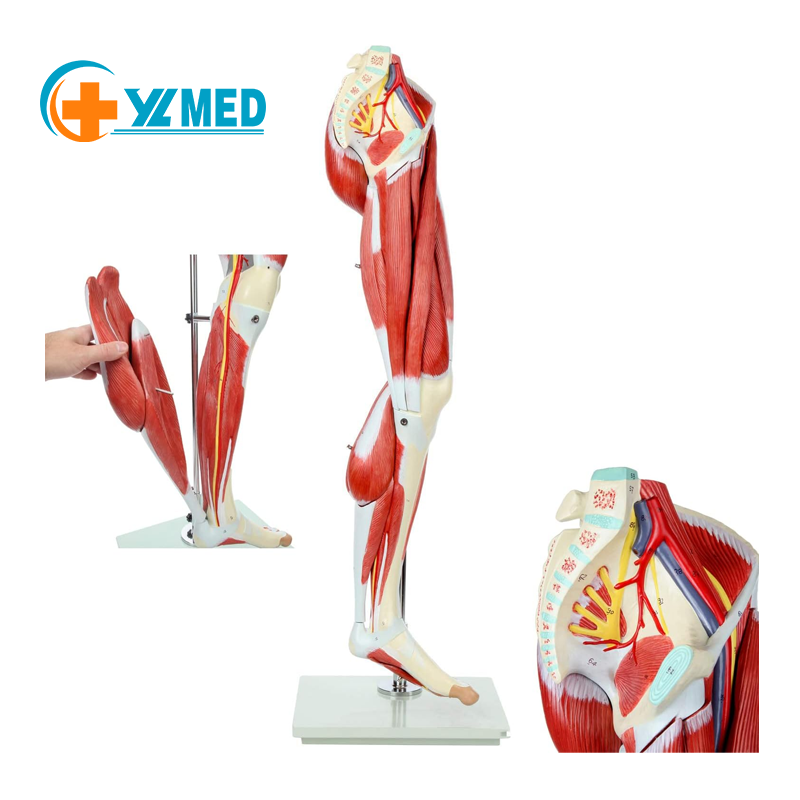
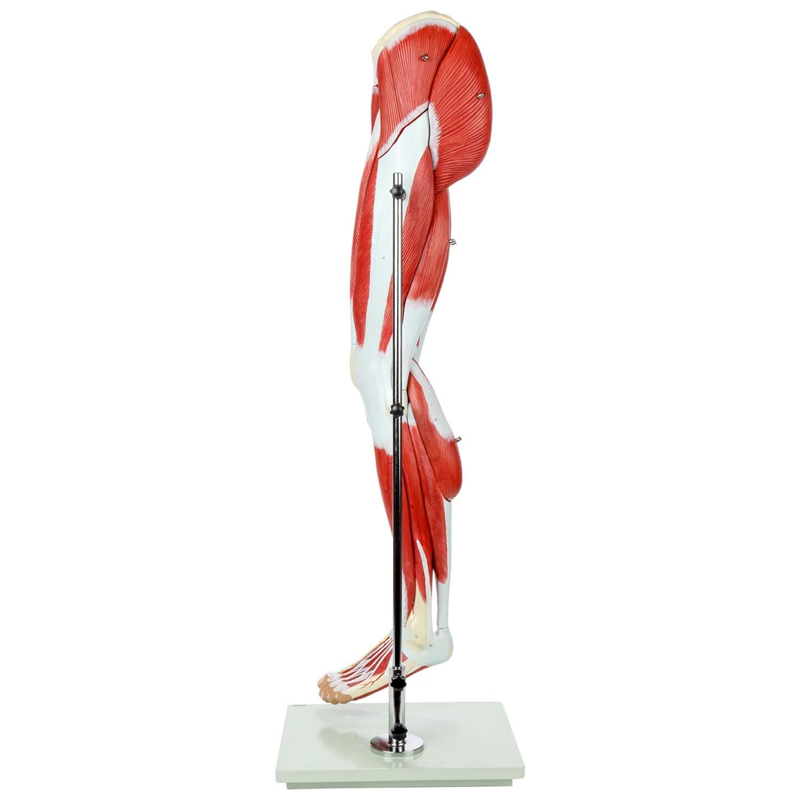
* Four-View Comprehensive Display: Presents complete lower limb muscular anatomy from anterior, posterior, medial, and lateral perspectives, accurately replicating muscle morphology, origins, insertions, and neurovascular distribution from the gluteus maximus to the toe muscles.
* High-Fidelity Muscle Texture: Eco-friendly PVC with hand-painted details replicates muscle fiber direction and fascial layers, with color coding to distinguish superficial and deep muscle groups for clear visibility.
* Integrated Skeleton & Neurovasculature: Clearly displays the femur, tibia, fibula, and major nerves and blood vessels,
intuitively demonstrating functional relationships between muscles, bones, and nerves.
* Stable Metal Stand: Adjustable metal stand with non-slip base supports multi-angle fixation and display, ideal for teaching in medical schools, sports medicine, and rehabilitation departments.
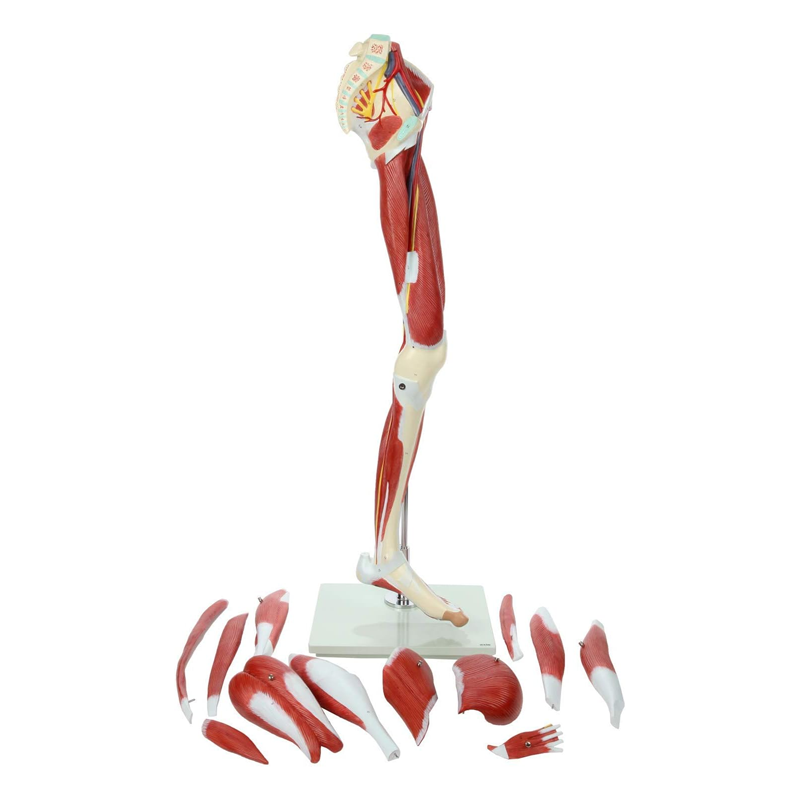
* Detachable Modules: Select deep muscle modules are removable to observe attachment points and internal structures, enhancing teaching flexibility.
A (Advantages) – Core Advantages
* Four-view display and full muscular coverage enable learners to intuitively understand lower limb biomechanics and muscle synergies, enhancing recognition of sports injuries and myofascial pain.
* Detachable structures and color coding allow dynamic demonstration of muscle contraction and joint movement, supporting case-based teaching of injury pathology to improve clarity and efficiency.
* Stable stand and durable materials ensure long-term, high-frequency use with low maintenance, meeting multi-disciplinary teaching needs.
* Clear muscle labeling simplifies the understanding of complex lower limb kinesiology concepts.
B (Benefits) – Practical Value
* Helps medical students, sports medicine, and rehabilitation physicians quickly build a 3D understanding of the lower limb muscular system, laying a foundation for diagnosis and rehabilitation training.
* Allows educators to visually demonstrate muscle function and movement correlations, improving learners’ depth of understanding and retention of lower limb conditions.
* As a patient communication tool, it visually presents muscle injury locations and rehabilitation points to reduce anxiety and enhance treatment compliance.
* Supports standardized clinical skill training, improving learners’ practical proficiency and employability.

1. High Quality Prototype, Handmade in a Solid, Non-Broken, Made Up of High Quality Environmental Friendly PVC 2. This Model IS A Natural Thigh Muscle Anatomical Model With 13 Parts. It Shows The Muscle Anatomy Of The Human Leg And The Complete Superficial And Deep Leg Muscles, AS Well As Tissues Such As Blood Vessels, Nerves And Tendons, Including 3. The Main Muscle Structures That Can Be Disassembled Are: Carpenter’s Muscle, Long Head Of Biceps, Glutes, Soleus Muscle, Gluteal Muscle, Semitendinosus Muscle, Rectus Femoris, Gastrocnemius Muscle, Gracilis Muscle, Hemi Muscle, Long Extensor Muscle
|
Product name
|
human anatomy model leg muscle model
|
|
Material
|
PVC
|
|
Packing size
|
1pcs/carton, 109x26x23cm, 11kgs
|

1. Use environmentally friendly PVC materials. It is a kind of synthetic material which is deeply loved in the world today and is widely used for its non-flammability and high strength.
2. The model can be disassembled into 13 parts.


3. Excellent painting, clearly visible
learn.


Products categories
-
Intubation Gastric Tube Manikin Medical Mannequ...
-
Medical Science and technology Ophthalmic retin...
-
Supplies Household Stroke Hemiplegia Electric H...
-

Medical Science Teeth Dental Teaching Resources...
-
Life Size Human Oral Nasal Cavity Throat Anatom...
-
Diabetic foot nursing training model for medica...